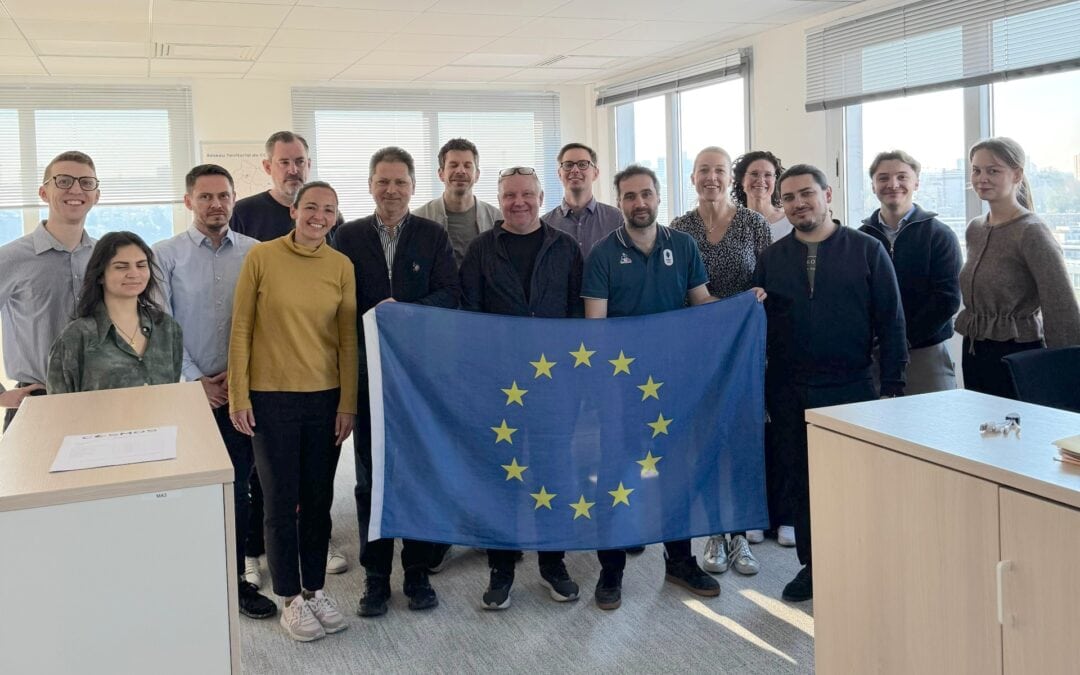
The TechSportKit – “Technological Support Kit for Sport Actors” project officially launched with a kick-off meeting in Paris on 18-19 March, bringing together partners from across Europe to begin a three-year collaboration focused on digital skills development in the sport sector.
The project will examine how new technologies, including digital tools and artificial intelligence, are affecting sport organisations, employment roles and skills needs. As digitalisation continues to influence the way sport is managed, delivered and promoted, the sector needs clearer evidence on the competencies required by current workers, future professionals and employers.
TechSportKit will respond to this need by researching the impact of emerging technologies on sport employment and by developing practical resources to support upskilling across the sector.
Understanding digital transformation in sport
The sport sector is increasingly exposed to new technologies in areas such as data analysis, communication, fan engagement, digital marketing, online learning, performance support, administration and organisational management. These developments are creating new opportunities, but they also require workers and organisations to adapt.
TechSportKit will explore how existing job roles are changing and where new profiles may emerge. The project will also consider how digital competencies can be defined across different levels of employment, supporting a clearer understanding of the skills required in sport organisations of different sizes and capacities.
First partner meeting in Paris
The first in-person Project Meeting took place in Paris and provided an opportunity for the consortium to confirm the project vision, clarify expectations and agree the roadmap for the coming months.
Aurélien Favre, EOSE Executive Director, and Wojciech Waśniewski, EOSE Projects & Research Coordinator joined the meeting and presented on the first major project deliverable that EOSE is leading on: a European study on digitalisation in the sport sector, starting with an international survey on digitalisation in sport. Project’s research tem also includes Warsaw University of Technology and UNEFS Bucharest.
The study will help establish an evidence base for the project and inform future work on training needs, competency development and practical support for the sport workforce.
Developing tools and training for the sport workforce
Over the next three years, TechSportKit will work towards a set of outputs designed to help the sport sector respond to technological change. These will include research on digitalisation and employment and training programmes focused on emerging technological competencies.
The aim is to support both current employees and new entrants to the sport labour market, helping them build the skills needed to work effectively in a changing environment.
By bringing together universities, technology organisations and sport sector partners, the project will connect research, training and practical sector experience. This combination will help ensure that the project outputs respond to real needs within sport organisations.
Next steps
Following the Paris kick-off meeting, the consortium will continue work on the European study and the wider research phase of the project. The findings will inform the next stages of TechSportKit and contribute to the development of resources to support digital skills and employment in sport.