EOSE contributed online to the hybrid Central and Eastern European Anti-Doping Summit held in Santorini, Greece, on 13 October 2026, during the session “Strengthening National Anti-Doping Systems through EU Funding”.
Building on EOSE’s long-standing cooperation with the World Anti-Doping Agency (WADA), EOSE Executive Director Aurélien Favre delivered a presentation entitled “Practical reflections on successful EU-funded projects”, drawing on EOSE’s extensive experience of developing and delivering European projects in the sport sector.
The contribution first acknowledged some of the main concerns regularly expressed by sport organisations when considering EU funding. These include limited time and human resources, administrative requirements, lack of expertise, high competition and low success rates, as well as challenges in identifying suitable funding opportunities and the right partners.
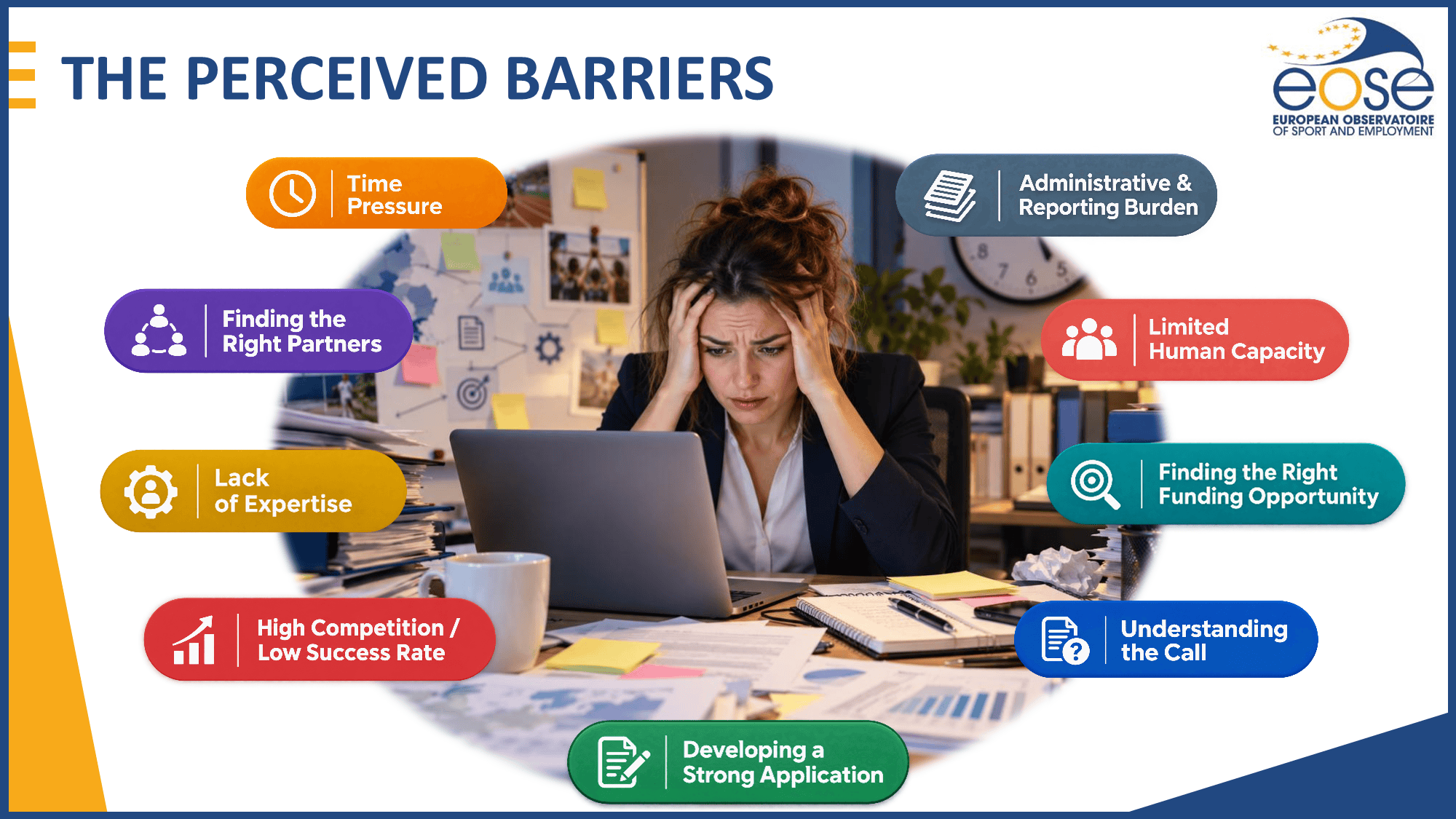
Some of the main barriers and concerns regularly expressed by sport organisations when considering EU-funded projects.
While these barriers are real, EOSE highlighted the importance of carrying out some essential groundwork before looking for the right call for proposals or starting to develop an application.
A key message was to start from a real need or identified challenge and then consider what already exists, define the project concept, potential activities and target groups, identify the expertise required, and reflect on expected impacts and sustainability. Only after this initial groundwork should organisations look for the most appropriate funding opportunity and move towards developing the application.
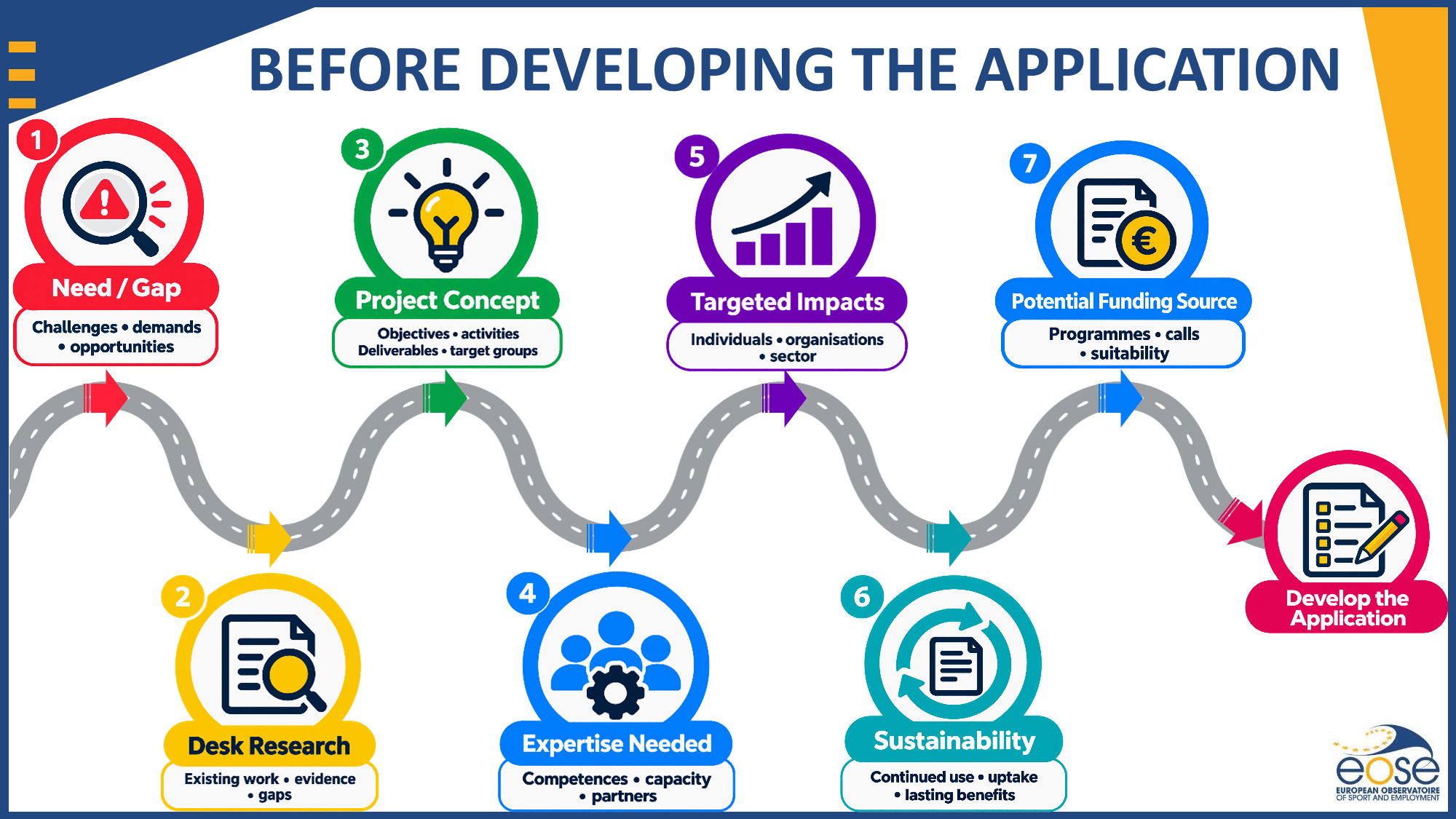
Some key steps to consider before identifying the most appropriate funding opportunity and developing the application.
EOSE also encouraged organisations to look beyond Erasmus+ Sport and consider the wider range of funding opportunities available through other EU programmes, including opportunities managed at national level through decentralised structures.
Particular emphasis was placed on the importance of thinking broader and looking wider when building partnerships. Organisations cannot be expected to have all the necessary competences and expertise in-house. Bringing together diverse types of organisations, perspectives and complementary expertise can contribute to stronger partnerships and more relevant projects.
As a practical example, EOSE showcased the Erasmus+ GLDF4CleanSport project, successfully delivered through cooperation between WADA, EOSE, National Anti-Doping Organisations and two international sport federations. The project provided a concrete illustration of how diverse partners can bring complementary expertise and experience together around a shared ambition.
EOSE thanks WADA for its continued trust and the opportunity to contribute, and the Hellenic Anti-Doping Agency for hosting this important event.
We were delighted to have the opportunity to contribute to the Summit and to share some practical messages drawn from EOSE’s experience of developing and delivering EU-funded projects in sport.
It was a real pleasure to exchange with the anti-doping community and to highlight the important potential of European cooperation and EU funding opportunities to support further development in this field.
Many thanks to WADA for its continued trust and for giving EOSE the opportunity to contribute.
Mr Aurélien Favre – Executive Director, EOSE
——————————————————————————————————————————————
Contact
Mr Aurélien Favre – EOSE Executive Director – Click here
——————————————————————————————————————————————
