Doping poses a fundamental threat to the integrity and values of sport. Behind every anti-doping rule, test or compliance decision are practitioners working across a wide range of organisations, sports and competition levels. Their work is complex, often unseen, and essential to keeping sport fair and safe. To do it well, these professionals need clear roles, shared standards and access to high-quality education and training.
While rules and responsibilities were increasingly harmonised worldwide, education and training pathways for anti-doping practitioners were not. Addressing this gap was the central purpose of GLDF4CleanSport, an Erasmus+ Sport project jointly led by the World Anti-Doping Agency (WADA) (WADA) and EOSE, as part of WADA’s wider Global Learning and Development Framework (GLDF).
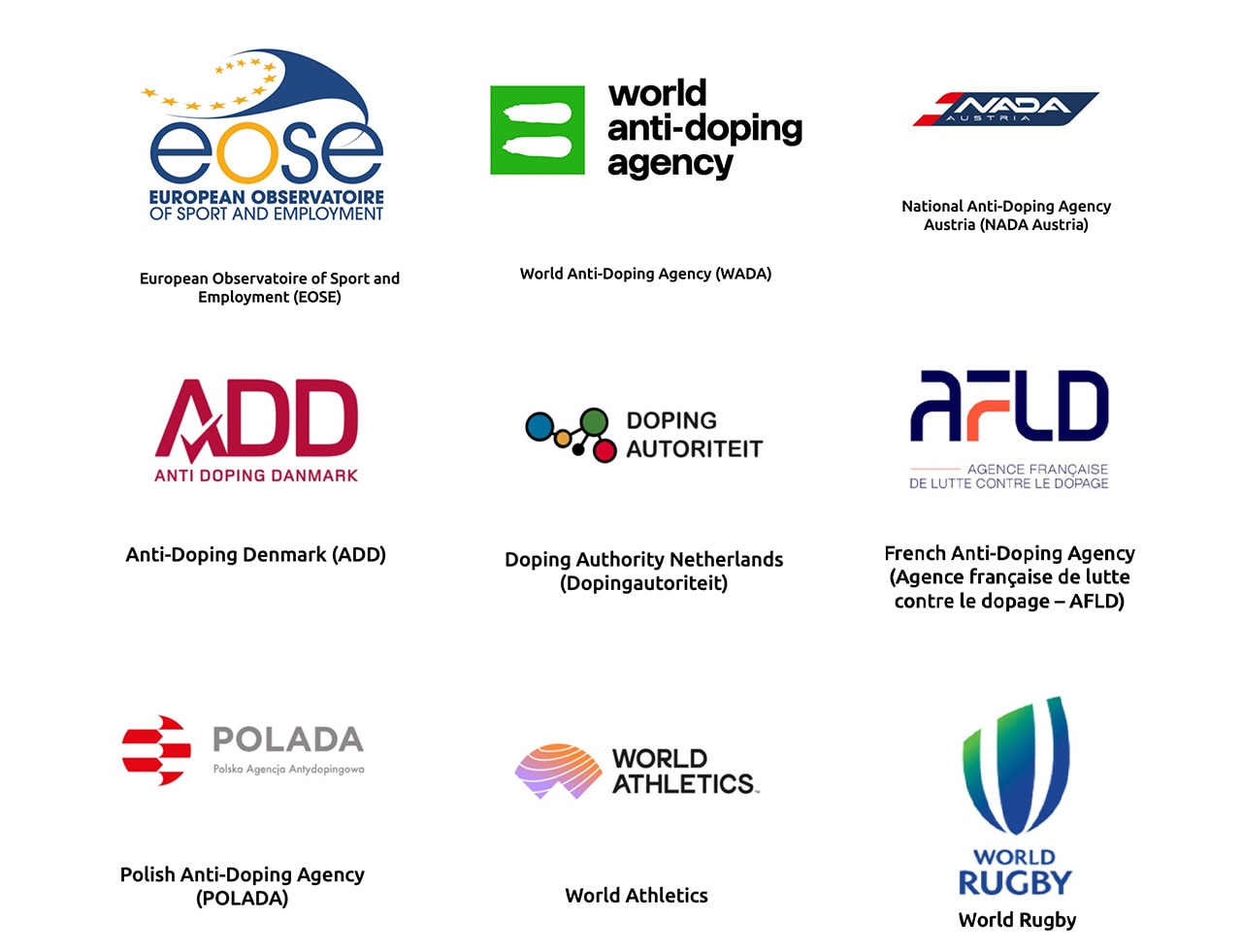
Launched in 2022, the project brought together WADA and EOSE with five European National Anti-Doping Organisations (Austria, Denmark, France, the Netherlands and Poland) and two International Sport Federations (World Athletics and World Rugby).
The project’s work began with evidence. Led by EOSE, the consortium carried out a first ever comprehensive mapping of the global anti-doping workforce, examining its size, structure, responsibilities and training needs. This research, including a large-scale survey, provided a shared reference point for the sector and informed all subsequent activities. Building on this, EOSE used its innovative 7-Step Model for Lifelong Learning to work with expert practitioners from around the world to define professional standards for four key anti-doping roles: testing, compliance, major events organisers and government advisors (each in English, French, Spanish).
The standards were used to design and pilot competency-based learning programmes, combining online and in-person elements, and supported by a dedicated train-the-trainer programme to ensure future delivery. Alongside this, practical self-assessment tools were created to help both practitioners and organisations reflect on current competence levels and identify development priorities (available through WADA’s ADEL platform).
The project formally concluded in September 2025, leaving behind a set of concrete, widely accessible resources now integrated into WADA’s education ecosystem. These include a global workforce research report, professional standards in English, French and Spanish, harmonised training programmes, and self-assessment tools available through WADA’s ADEL platform. A sustainability plan is also in place to support ongoing implementation and further development beyond the project’s lifetime.
Amanda Hudson, Director of Education, WADA, commented on the conclusion of the project:
WADA welcomes the outcomes of GLDF4CleanSport, which provide an important evidence base for strengthening learning and development across the anti-doping system. By strengthening professional roles, skills and learning pathways, the project contributed to more consistent practice, greater confidence in clean sport systems and, ultimately, stronger protection of sport’s integrity and values. We are grateful to all project partners for their professionalism and collaboration throughout this initiative.
We would like to thank all the partners and all those in the wider anti-doping sector who supported the project for their commitment and engagement.
Partnership:
Contacts:
Aurélien Favre – EOSE Executive Director
Ben Gittus – EOSE Director of Standards
Colin Allen – WADA Manager, Education (Global to Local)
